
My first short film since 2018.
All work done by me, over a weekend
On YouTube: https://youtu.be/Gx27zXs1PSs
Writing about technology, software engineering, the craft, and coding
My first short film since 2018.
All work done by me, over a weekend
On YouTube: https://youtu.be/Gx27zXs1PSs
This is a comprehensive, step-by-step guide for deploying containerized services to Amazon EKS. You’ll learn how to:
A Complete Guide to Deploying a Service to AWS EKS
This is a comprehensive, production-ready deployment guide covering:
– Infrastructure provisioning with Terraform
– Container builds and ECR push with GitHub Actions
– Kubernetes deployments with Helm
– IAM Roles for Service Accounts (IRSA) configuration
– Complete troubleshooting section
Estimated time: 2-3 hours first time, ~30 minutes after that.
The guide includes complete working examples – not snippets, but full Terraform modules, Helm charts, and GitHub Actions workflows you can adapt.
*Questions or improvements? Open an issue on the repo or message me on LinkedIn.*

I’m starting something simple to help fellow engineers.
Over the last few months, people reached out with questions about direction, strategy, and “what actually matters” when trying to get hired in Europe/Sweden. It was in response to an off-the-cuff post during the summer (the Hug-a-Platform-Engineer one).
I’m grateful actually for some of the humor getting lost in translation! It’s opened up an opportunity to do something new.
So, I’m starting a weekly series: Office Hours: Ask a Senior Engineer on Fridays from 9am to 3pm CEST.
If you’re a junior engineer, a career-switcher, mid-and-stuck, senior-and-stuck, or just trying to break into engineering in the EU, drop one question below.
Anything about:
* skill focus
* job search strategy
* what EU/Sweden roles really require
* technical direction
* getting unstuck
To make it easier, here’s an example:
Question
“I’m a platform engineer outside of Europe. How do I get noticed by EU teams?”
Mini-answer
Make one small public project that demonstrates reliability work — something like a simple service with a playbook + basic telemetry. Show deployment with CI and basic secrets management. Hiring managers trust what they can see, and you can build credibility in 2–4 weeks this way.
So, that’s it!
What’s one question you want clarity on?
I’ll pick one each week, and I’ll answer it honestly and practically — no grift, no sales pitch.
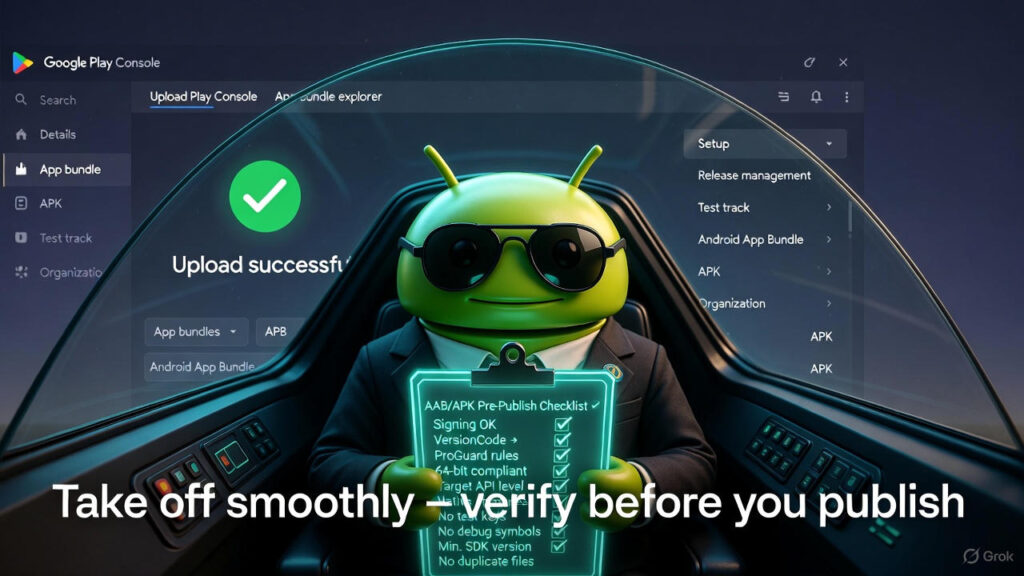
I posted last week about writing some scripts to sanity-check and validate Android bundles before uploading to Google Play Store (and having them rejected!).
I’ve made the scripts – one for AABs and APKs – open source as public gists.
curl -s https://gist.githubusercontent.com/minademian/71a5a3d0243496ce6a2a49956c01e4cd/raw/05189c8da3c8833595546a68325a3617cbd1944f/verify_aab_release.sh | bashcurl -s https://gist.githubusercontent.com/minademian/6e841c8e1a84308c6b3dc937a2d4a4cd/raw/4768df88d3d3111c134700c0637ed030a97af3a9/verify_apk_release.sh | bashYou can take it one step further and add it to your precommit hook, using the hook management tooling of your choice.
It will look like this:
yarn test || exit 1

# script in package.json: "bash./scripts/verify_aab_release.sh",
yarn validate-packages || exit 1

npx lint-staged || exit 1
Continuing my foray into OSS, I’ve been spending more time with my first (tech) love of the command-line and am teaching myself how to write shell completion scripts.
Second-born: yarn-shell-completion! https://github.com/ursine-code/yarn-shell-completion
Big h/t to @Felipe Contreras on YouTube for inspiring me to delve into this area of engineering and making it easy(-ish) to get into!
🚀 My first open-source software package!
A small collection of server utilities designed to help audit production servers. It was really incredible writing, prototyping, refactoring, and packaging this.
Check it out here!
Installation via Homebrew, Maven, Deb, and RPM is coming soon.
“Contrary to conventional wisdom, the 2023 ABS (which produced 2022 data) found that adoption of technology, including AI, did not change overall worker numbers.
Businesses most often reported their “number of workers did not change overall” between 2020 and 2022 after adopting any of the five technologies the ABS tracked: AI, specialized software, robotics, cloud-based tech or specialized equipment.”
Cutting through all the hype on AI, a take from the recent US census report.
I thought LLMs were just Copilot.
This week I discovered agents — and it changed how I code.
Instead of autocomplete, I had Claude Sonnet 4 troubleshooting bugs with me in real time. I redirected it when it drifted, or followed when it made sense. At one point, I asked it to output all its decisions into Markdown — suddenly I had a log of learnings I could share with the team.
A coworker spun up an Model Context Protocol (MCP server), so we all could mine knowledge about our project through hundreds of Confluence pages. Suddenly I wasn’t a solo engineer anymore — I was a team of 1 human + 2 agents.
The result? Faster debugging, better knowledge capture, and new side project ideas. I’m thinking, how could I implement a MCP server to mine Google Drive folders? Or, OneDrive? And hook them into apps or blogging platforms like this one WordPress?
So many possibilities! I’m excited! Hoohaa.
While working with Docker builds, you may already be familiar with building images and creating containers:
$ docker build --build-arg FOO=BAR FOUX=BARS -t my-docker-image:latest .
$ docker run -d -p 8088:8080 my-docker-image
This would build and create a container for the following Dockerfile:
FROM node:20-slim AS builder
WORKDIR /app
COPY . .
RUN yarn install --immutable --immutable-cache --check-cache
RUN yarn build:prod

FROM builder AS test
RUN yarn test:integration

FROM node:20-slim AS final
WORKDIR /app
ENV NODE_ENV=production
COPY --from=builder /app/dist ./dist
COPY --from=builder /app/package.json ./package.json
COPY --from=builder /app/yarn.lock ./yarn.lock
RUN yarn install --production --frozen-lockfile
ENTRYPOINT ["node", "./dist/src/server.js"]Enter the --target flag:
$ docker build --target=test -t my-api:test .The --target flag will build the Dockerfile from the top to the specified stage, and then stop — skipping any further layers like the final production image. This is ideal when you only want to run tests in a CI/CD pipeline without building the full image.
- name: Build Docker image for testing
  run: docker build --target=test -t my-api:test .

- name: Run integration tests in container
run: docker run --rm my-api:testBefore I went on summer vacation from work, I was asking a coworker for help with an urgent PR. I needed to merge the frontend component in order to get the whole feature out. (It was a full-stack project.)
I shot off “when you get a chance” at the end of the message.
And I waited. And waited. And waited.
When I checked back to see if they had read the message or not, that little qualification, the throw-away prefix, glared at me.
And it hit me. Well… I said to him, when you get a chance. So, right now he can’t look at it.
So, I sent off two messages in a single message – this is urgent and WHEN YOU GET A CHANCE NO PRESSURE.
I went back and edited the message, apologizing for my lack of clarity and double messaging. Then, I made it clear that I would appreciate his help with him as soon as he can.
I got the approval I needed to move forward.
A really fascinating moment in how we communicate and how throwaway phrases can betray our intentions.